
Utilization of Geospatial Technology in Deforestation Detection and Reforestation Efficiency: A Sustainable Forestry Approach
Geospatial & Informatics
Introduction
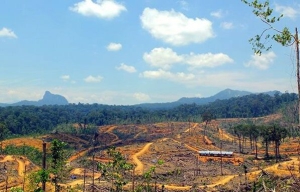
Deforestation is one of the most pressing environmental issues, contributing to biodiversity loss, climate change, and soil degradation. In many tropical countries, including Indonesia, the rapid loss of forests is often attributed to logging, land conversion for agriculture, and urban expansion. The traditional methods of monitoring deforestation, such as ground surveys, have limitations, especially in large, remote, or difficult-to-access areas. Geospatial technologies, however, offer a promising solution for detecting deforestation and enhancing reforestation efforts.
Through the use of satellite imagery, remote sensing, and Geographic Information Systems (GIS), it is now possible to detect and map deforestation at a large scale. These technologies allow for the identification of areas that require immediate reforestation, enabling more efficient and targeted efforts for forest restoration. Additionally, drones equipped with seeding technology can be used to directly plant seeds in areas identified as needing reforestation, offering a cost-effective and time-efficient solution for restoring ecosystems.
Geospatial Technologies for Deforestation Detection
One of the key technologies used in deforestation detection is remote sensing, which involves collecting data about the Earth’s surface through satellite imagery or airborne sensors. Satellite imagery, especially from sources like Landsat or Sentinel-2, provides high-resolution images that can be analyzed over time to monitor changes in forest cover. These images capture visible, infrared, and thermal data, which can be processed to distinguish between forested and non-forested areas.
Another significant technology is LiDAR (Light Detection and Ranging). LiDAR technology works by emitting laser pulses to measure the distance between the sensor and the Earth’s surface, creating highly detailed 3D models of the terrain (Zhou et al., 2019). This technology is particularly effective in detecting deforestation in areas with dense vegetation, as it can penetrate through the canopy and provide accurate data on both the ground surface and the vegetation layer.
How Geospatial Technology Detects Deforestation
Satellite imagery can detect deforestation by comparing images of the same area over time. By assessing the changes in vegetation cover, it is possible to identify areas where forested land has been converted into non-forest land. For instance, the analysis of Normalized Difference Vegetation Index (NDVI), a measure of vegetation health, can highlight areas where vegetation has significantly decreased, indicating potential deforestation.
LiDAR, on the other hand, provides highly accurate information about both the canopy and the ground surface. By creating a Digital Elevation Model (DEM) and a Digital Surface Model (DSM), LiDAR allows for the precise detection of vegetation loss, even in dense forests. The advantage of LiDAR over traditional methods is its ability to capture both ground and non-ground data, making it highly effective in regions where vegetation cover obscures the ground (Guo et al., 2010).
Optimizing Reforestation Efforts through Geospatial Technology
Once deforestation-prone areas have been identified, geospatial technology can be utilized to determine the most efficient and effective reforestation strategies. GIS (Geographic Information Systems) plays a crucial role by integrating various data layers, such as vegetation cover, topography, and climate conditions, to identify the best locations for reforestation efforts.
For instance, GIS can help in:
- Identifying priority areas for reforestation based on deforestation maps.
- Assessing soil health and suitability for planting specific types of vegetation.
- Mapping water sources and other critical resources to optimize planting efforts.
- Monitoring reforestation progress over time by comparing satellite images before and after planting.
By combining data from LiDAR, satellite imagery, and GIS, the process of reforestation can be optimized, ensuring that resources are allocated where they are most needed.
The Role of Drones in Efficient Reforestation
In recent years, drones have emerged as a revolutionary tool in reforestation efforts. Drones equipped with seeding technology can be used to plant tree seeds in areas that are difficult to reach by traditional methods. These drones are capable of flying over vast forested areas, identifying gaps in the forest cover, and dispersing seeds with high precision.
The use of drones in reforestation provides several advantages:
- Cost-Effective: Drones can cover large areas quickly and at a lower cost compared to manual planting.
- Efficiency: Drones can access remote and rugged terrain that may be difficult for human labor to reach.
- Scalability: Drones can be deployed in vast areas, allowing for the restoration of large ecosystems with minimal effort.
- Data Collection: Drones can also be equipped with cameras and sensors to monitor the progress of reforestation efforts and gather real-time data on the state of the forest.
By combining drone technology with geospatial mapping and data analytics, it is possible to not only detect deforestation but also implement targeted and efficient reforestation plans.
Case Study: Geospatial Technology in Deforestation and Reforestation in Indonesia
In Indonesia, where deforestation is a major concern, geospatial technologies have already shown great promise in forest monitoring and restoration. Studies have used Sentinel-2 imagery to monitor deforestation rates in the country, identifying key areas for intervention (Prasetyo et al., 2016). Moreover, LiDAR technology has been instrumental in mapping forest topography, helping to identify areas where soil conditions may need improvement before replanting.
Drone-based reforestation projects have also been successfully implemented in parts of Indonesia. These projects use drones to drop seeds in hard-to-reach areas, effectively expanding reforestation efforts to areas that would otherwise be difficult to access. Combining these methods with GIS data allows for precise targeting of reforestation efforts, increasing their chances of success.
Conclusion
Geospatial technologies, including satellite imagery, LiDAR, GIS, and drones, are transforming the way we approach deforestation and reforestation. By enabling precise detection of deforestation and optimizing reforestation strategies, these technologies offer a sustainable solution for managing forests and mitigating the effects of deforestation. In the case of Indonesia, where deforestation is a critical issue, the integration of these technologies could significantly improve the efficiency and effectiveness of reforestation efforts, helping restore critical ecosystems and combat climate change.
References
Prasetyo, Y., et al. (2016). Pemanfaatan LiDAR untuk ekstraksi DEM di wilayah tropis Indonesia.
Guo, Q., Li, W., Yu, H., & Alvarez, O. (2010). Effects of topographic variability on LiDAR-derived terrain models. ISPRS Journal of Photogrammetry and Remote Sensing.
Zhou, T., Popescu, S., & Lawing, A. (2019). LiDAR remote sensing for terrain analysis. Remote Sensing.
Meng, X., Currit, N., & Zhao, K. (2010). Ground filtering algorithms for airborne LiDAR data: A review. Remote Sensing.