
Utilization of Geospatial Technology in Forest Fire Prevention: Identifying High-Risk Fire Zones
Introduction
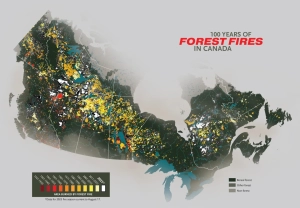
Forest fires are a significant environmental issue that can lead to severe consequences for ecosystems, human health, and the economy. In Indonesia, with its vast tropical forest cover, forest fires frequently occur, especially during the dry season. The main causes of forest fires include land clearing activities, natural factors, and human negligence. Therefore, it is crucial to develop systems capable of accurately and rapidly identifying high-risk forest fire zones.
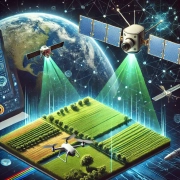
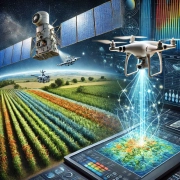
With the advancement of geospatial technologies, the use of satellite imagery, remote sensing sensors, and spatial modeling has provided solutions for detecting and mapping forest fire-prone areas. Technologies such as LiDAR (Light Detection and Ranging) and thermal satellite imagery hold great potential for offering highly detailed data on forest conditions, which aids in monitoring and preventing forest fires.
Geospatial Technology in Forest Fire Prevention
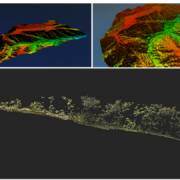
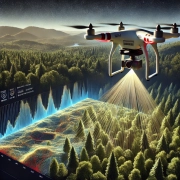
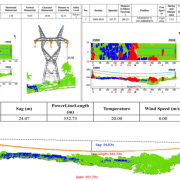
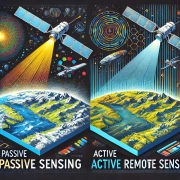
One of the key technologies used in forest fire prevention is LiDAR. LiDAR is capable of producing highly accurate topographic maps, including vegetation and terrain structure mapping, which can serve as indicators of fire-prone areas. LiDAR operates by emitting laser pulses toward the Earth’s surface and measuring the time it takes for the pulse to return, thereby generating highly detailed 3D models (Zhou et al., 2019).
In addition to LiDAR, satellite imagery also plays a vital role in identifying high-risk fire zones. High-resolution satellite imagery, coupled with thermal data, can detect abnormal heat signatures, indicating active fires or areas susceptible to fire. This technology allows for continuous monitoring of forest conditions and provides early warnings regarding potential fires.
How Geospatial Technology Works in Forest Fire Mapping
LiDAR’s role in forest fire prevention starts with mapping vegetation and topography in a given area. Vegetation mapping is critical because forest fires are often triggered by specific vegetation types, such as dry shrubs and trees. Furthermore, topography is important in determining the direction in which a fire may spread, as fires tend to move more easily across steep slopes.
Thermal satellite imagery can be used to detect surface temperatures that deviate from normal, which may indicate a fire. Sentinel-2, part of the Copernicus program, provides high-resolution imagery in multiple spectral bands, including infrared, which is particularly useful for detecting heat sources and fires that are ongoing.
Integrating LiDAR and Satellite Imagery into a Forest Fire Early Warning System
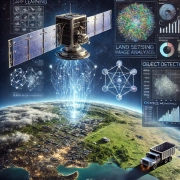
By integrating LiDAR data with satellite imagery into a Geographic Information System (GIS), it is possible to enhance the monitoring and analysis of forest fire risks. Combining topographic, vegetation, and surface temperature data allows GIS-based systems to predict areas most vulnerable to fire outbreaks.
Such systems can also create fire risk maps, which can be used to plan preventive measures. For example, the system could identify areas where dry vegetation needs to be cleared or alert authorities to potential fire outbreaks in certain regions.
Advantages of Geospatial Technology in Forest Fire Prevention
The use of geospatial technology provides several advantages, including:
- Real-time Monitoring: Satellite imagery and thermal sensors allow for real-time data collection on ongoing fires, enabling faster response times.
- Accurate Mapping: LiDAR technology provides highly accurate maps of terrain and vegetation, which are essential in planning fire prevention strategies.
- Risk Analysis: By integrating various data sources, it becomes possible to perform comprehensive risk assessments for forest fire outbreaks.
- Early Warning: Early warning systems can be developed by integrating these technologies to alert authorities about potential fire risks before they spread.
Case Study of Geospatial Technology in Forest Fire Management in Indonesia
Several studies in Indonesia have demonstrated the effectiveness of geospatial technology in forest fire monitoring. One study showed that Sentinel-2 imagery could accurately map fire-prone areas (Prasetyo et al., 2016). LiDAR has also proven to be an effective tool in mapping areas that are difficult to survey through conventional methods, such as dense forests.
Conclusion
Geospatial technologies, particularly LiDAR and satellite imagery, play a crucial role in forest fire prevention. By providing detailed data on vegetation, topography, and surface temperatures, these technologies enable more effective monitoring and early detection of forest fires. The integration of LiDAR and satellite imagery with GIS enhances the ability to predict fire risks and plan preventive actions, contributing to more sustainable forest management practices.
References
Prasetyo, Y., et al. (2016). Pemanfaatan LiDAR untuk ekstraksi DEM di wilayah tropis Indonesia.
Chen, Q., Gong, P., Baldocchi, D., & Xie, G. (2017). Filtering airborne LiDAR data for vegetation analysis. Remote Sensing of Environment.
Zhou, T., Popescu, S., & Lawing, A. (2019). LiDAR remote sensing for terrain analysis. Remote Sensing.
Meng, X., Currit, N., & Zhao, K. (2010). Ground filtering algorithms for airborne LiDAR data: A review. Remote Sensing.

Leave a Reply
Want to join the discussion?Feel free to contribute!