Methods and analysis
Training Labels for Remote Sensing: Class Definitions and Ambiguous Pixels
A label represents a defined interpretation at a location and time.
6 min readRead article ↗
THE ITSENSING JOURNAL
Practical satellite reviews, remote sensing methods and GIS workflows. Explore the science, understand the limits, and take your next project into iT Sensing.
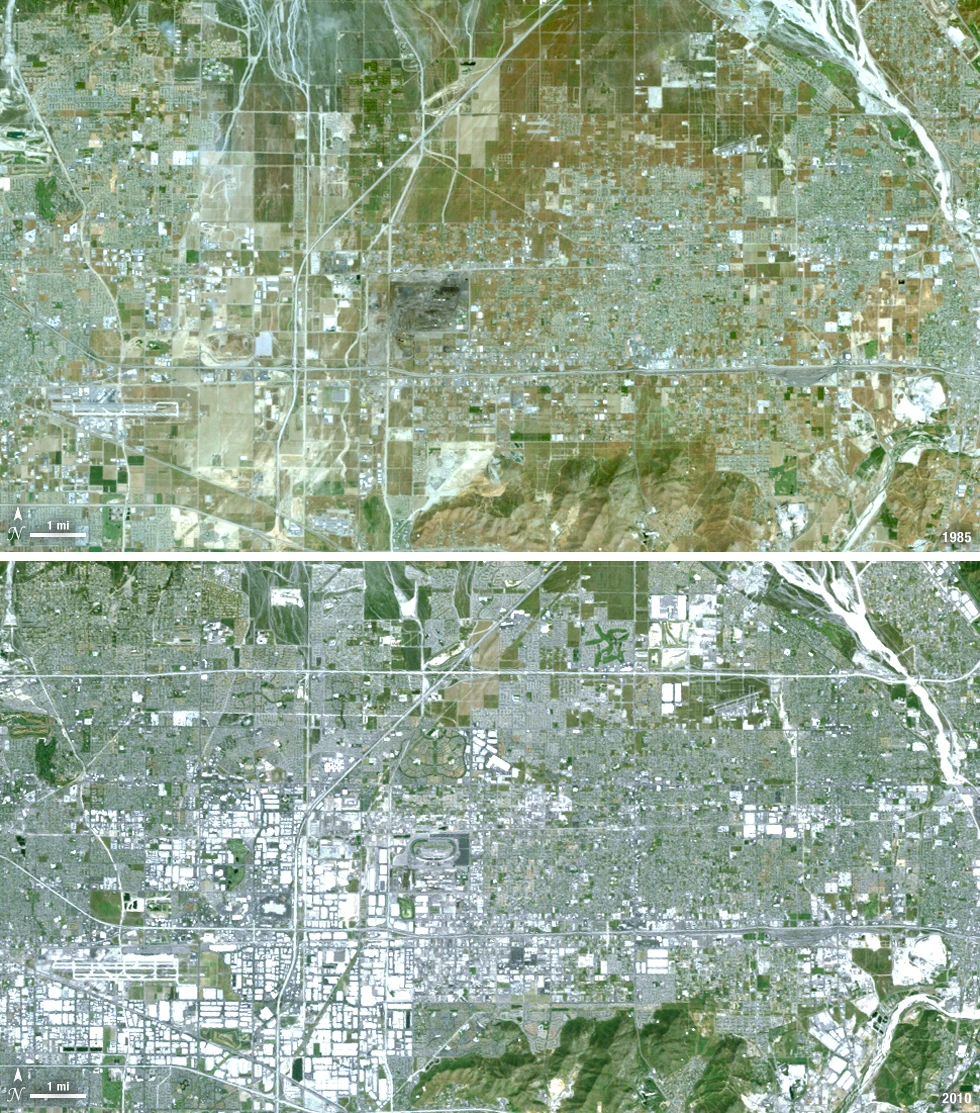
A label represents a defined interpretation at a location and time.
Temporal validation evaluates a model on dates or seasons excluded from training.
Spatial cross-validation separates training and evaluation according to geography or operational units.
Clustering groups observations according to feature similarity.
A support vector classifier separates labeled feature patterns using a chosen kernel and regularization.
A random forest combines decision trees fitted on training examples.
Imaging spectroscopy can detect absorption signatures associated with some atmospheric gases under suitable conditions.
Narrow-band reflectance can support models of vegetation traits such as pigments or water-related properties.
Anomaly detection finds spectra that differ from a modeled background.
Dimensionality reduction compresses correlated spectral channels into fewer features.
An endmember is a reference spectrum used to describe a component in a spectral model.
Linear unmixing models a pixel spectrum as a weighted combination of endmember spectra.
No matching articles. Try a different search.